Natural gas or propane?
It depends on your meter capacity, your lot and how long you want it to run.
Our fix: We check the meter and the line run first, then give you both options with the trade-offs.
This is my problem →Whole-Home Backup Power
Explore automatic backup power for your home.
The standby generator specialists for Abbotsford. 14 years in, 650+ installs, and a free on-site quote.
A standby generator can help keep important electrical systems operating when utility electricity is unavailable. For Fraser Valley homeowners, backup power may support refrigerators, freezers, heating controls, lighting, communications equipment, water pumps, and other essential household functions. Larger installations may support additional appliances, depending on the generator capacity and electrical demand.
ABBOTSFORD STAND BY GENERATORS PROS helps homeowners evaluate natural gas and propane standby generator systems according to their individual properties. We discuss what needs backup power, available fuel supply, electrical equipment, and installation conditions before recommending an approach.
Unlike a portable generator, a permanently installed standby unit can be configured to start automatically when utility electricity fails. An appropriate automatic transfer switch connects the intended electrical loads to generator power once the equipment reaches its required operating conditions. When utility power returns and stabilizes, the system can transfer the loads back.
Automatic standby systems are convenient, but their capabilities must be clearly understood. The generator cannot supply more than its rated capacity, and startup generally involves a short interruption before backup electricity becomes available. Proper installation and ongoing maintenance are important to reliable operation.
Recognise yours? Call and say it in your own words.
It depends on your meter capacity, your lot and how long you want it to run.
Our fix: We check the meter and the line run first, then give you both options with the trade-offs.
This is my problem →Clearances, gas piping and the transfer switch all get inspected.
Our fix: Permits, gas and electrical work are planned into the job, not bolted on after.
This is my problem →Setbacks, windows, neighbours and a gas run decide the spot.
Our fix: We walk the property, measure, and show you where it fits before you commit.
This is my problem →Advertised prices skip the gas line, the pad, the permit and the panel work.
Our fix: You get one written number that covers the whole job, after a free on-site quote.
This is my problem →One call and we will tell you straight what it takes.
Your town is on the list. Call for a free look.
The correct standby generator depends on the electrical loads it must support. A home relying mainly on gas heating may have different electrical demands from one using electric heating, a heat pump, a well pump, or several large appliances. We help homeowners establish priorities and consider the loads that may operate at the same time.
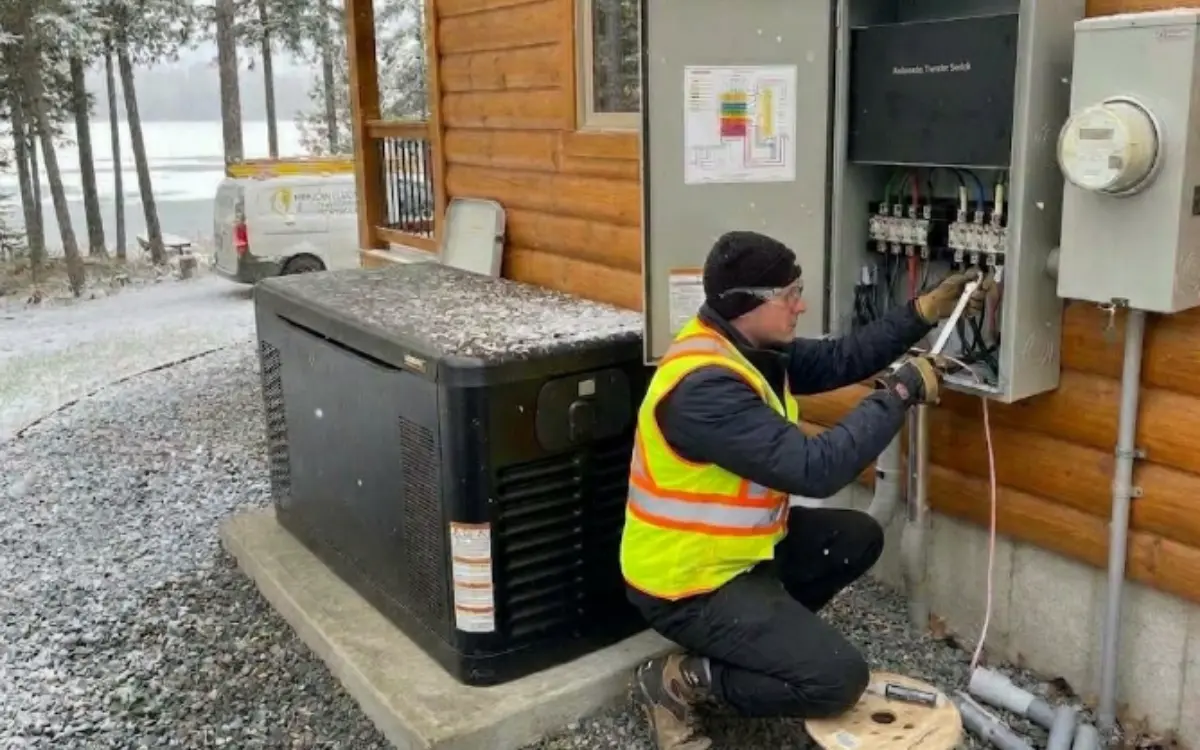
Residential generator installation can involve a generator pad, outdoor equipment placement, transfer switch, electrical panel work, fuel connections, permits, and commissioning. Existing electrical infrastructure and available fuel service can significantly affect the scope. We aim to explain those requirements early so homeowners understand the complete project rather than focusing on the generator alone.
A generator should be accessible for routine inspections, service, and future repairs. Owners also need to understand normal startup behaviour, automatic transfer operation, alarm messages, and recommended maintenance schedules.
Generator selection begins with the electrical equipment you want to use during an outage. Heating, air conditioning, refrigeration, electric cooking equipment, pumps, and other appliances all contribute to demand. We discuss the expected loads, including equipment that may need additional power when starting. This helps determine whether a larger whole-home system, selected essential circuits, or load management is appropriate. The goal is practical backup coverage that matches the proposed equipment.
Natural gas standby generators can be convenient for homes with a suitable utility gas connection. A natural gas system does not require an on-site propane tank, but the existing service must have sufficient capacity for the generator and other connected appliances. Gas pressure, piping requirements, equipment demand, and applicable permits must be considered. Appropriately qualified gas professionals are required for regulated fuel-system work. We include these requirements in the project planning discussion.
Propane generators can be a practical choice for homes and rural acreages without natural gas connections. These systems require a compatible generator, appropriate fuel piping, and an adequately sized propane storage arrangement. Expected runtime depends on the generator, electrical load, available propane, and operating conditions. Storage tank placement and gas-system work must meet applicable requirements. We help homeowners consider fuel availability and practical installation arrangements before selecting equipment.
An automatic transfer switch is an important part of many permanently installed standby generator systems. It monitors the utility supply and transfers selected electrical loads to the generator when appropriate conditions are met. Transfer equipment must properly isolate the building from the utility source to prevent dangerous backfeeding. Switch selection and electrical installation depend on the existing electrical system and intended generator loads. This work requires appropriately qualified electrical personnel.
Standby generators require an appropriate outdoor installation location. Equipment must have suitable clearances, ventilation, exhaust separation, and access for maintenance. Property layout and nearby structures can affect placement. Some installations require a prepared mounting surface, ground preparation, or additional electrical and fuel runs. We discuss these requirements before installation so customers understand the practical work involved.
Once installation work is complete, the generator and associated equipment require appropriate operational checks. These may include startup testing, transfer operation, load verification, control checks, and review of warning indicators. Homeowners should understand what the system is intended to power, how automatic operation works, and what to do if the equipment reports a problem. We emphasize clear owner guidance and maintenance according to manufacturer requirements.
Want it priced? Free on-site quote.
This is the part generic electrical companies rush. It is the part that decides whether your generator carries the house or trips on the first cold night.
Our project manager lists every load you want running: furnace or heat pump, well or sump pump, fridge and freezers, range, dryer, EV charger. The motors matter most. A heat pump or well pump can pull several times its running current for the first second, so we size for that surge or add load management to stage it.
| Coverage | Typical size | What it runs |
|---|---|---|
| Essentials | 10–14 kW | Furnace fan, fridge, lights, sump or well pump, internet |
| Most of the house | 16–20 kW | Everything except one or two heavy loads, managed |
| Whole home | 22–26 kW | Heat pump or AC, range, dryer, EV charger with load-shed |
| Farm / commercial | 30 kW+ | Three-phase motors, barns, kitchens, liquid-cooled sets |
Most whole-home jobs get a 200 A service-entrance rated automatic transfer switch beside the meter, so the whole panel transfers. Older or full panels get an essentials sub-panel instead. Large homes and acreages with 400 A split services get a 400 A switch. Smart load modules drop the EV charger, dryer or AC until there is room.
A 22 kW unit on natural gas can burn in the range of 300 cubic feet an hour at full load, which is more than many older meters were set for. Our gas fitter checks the meter and the pipe size and pressure-tests under load, and we book a FortisBC meter upgrade when it is needed. On propane, the tank is sized for your outage hours and for cold-weather vaporization, usually 500 or 1,000 US gallons on an acreage.
The unit sits on a level composite or concrete pad with the manufacturer's clearances to windows, doors, vents and combustible walls, and the gas code clearances from air intakes. On floodplain lots we raise the pad and the switch above the flood level. On hillsides we anchor to rock.
We do not leave until we have pulled the main and watched the house transfer, usually within about 15 to 30 seconds. Then we set the weekly self-test to a quiet weekday afternoon, connect the Wi-Fi monitor and walk you through it.
Free site visit · Abbotsford
We measure the panel, the meter and the lot, then give you a fixed written price.
(604) 455-5765We are not tied to one brand. We pick the unit that fits your loads, your fuel and your lot, and we service most makes no matter who installed them.
Guardian air-cooled home units from 10 to 26 kW, and liquid-cooled Protector sets for bigger homes and farms.
Quiet air-cooled home generators and commercial sets with strong load-handling for motors.
QuietConnect home units and heavy-duty commercial and agricultural diesel and gas sets.
PowerProtect home standby units with built-in load management.
Home standby units built by Generac, often a good value pick for essentials systems.
Not sure which brand fits? We will tell you on the free visit.
| Service | Estimated Cost | Average |
|---|---|---|
| Essential-load standby generator | $8,000 to $12,000 | Typically 7 to 14 kW, air-cooled |
| Whole-home standby generator | $12,000 to $20,000 | Typically 16 to 26 kW, air-cooled |
| Natural gas generator installation | Included in the range above | Depends on gas supply and meter capacity |
| Propane generator installation | Included, plus the tank | Depends on tank size and piping |
| Automatic transfer equipment | Included in the range above | Depends on electrical configuration |
| Generator site preparation | Included, unless the site is difficult | Depends on slope, access and trenching |
Most installs run $8,000 to $20,000 installed. Prices depend on equipment capacity, electrical infrastructure, fuel connections, permits, installation access, and site requirements. You get one fixed written quote after a free on-site visit.
One written number after a free on-site quote.
After install: an annual service visit with oil, filter, battery test, a run under load and a written report.
We focus on the electrical systems that matter rather than recommending generator size from house square footage alone.
We discuss natural gas and propane requirements based on available infrastructure.
We consider transfer equipment, placement, fuel supply, regulated work, and commissioning.
We recognize the differences between urban homes, rural properties, and acreages.
Call and ask about Standby Generator Installation.
Ready to explore whole-home standby power? Contact us for a generator installation discussion tailored to your Fraser Valley property.
(604) 455-5765Tell us about your home, important appliances, existing electrical systems, and available fuel.
We assess the relevant electrical, fuel, access, and equipment placement considerations.
We outline the proposed generator capacity, transfer equipment, installation scope, and necessary approvals.
Installation is organized around applicable requirements and appropriately qualified trades.
The system is commissioned and customers are guided through expected operation and maintenance considerations.
One call and we will tell you straight what it takes.
Pick one, or call and we will sort it out.